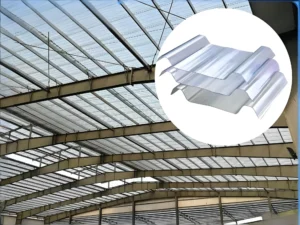
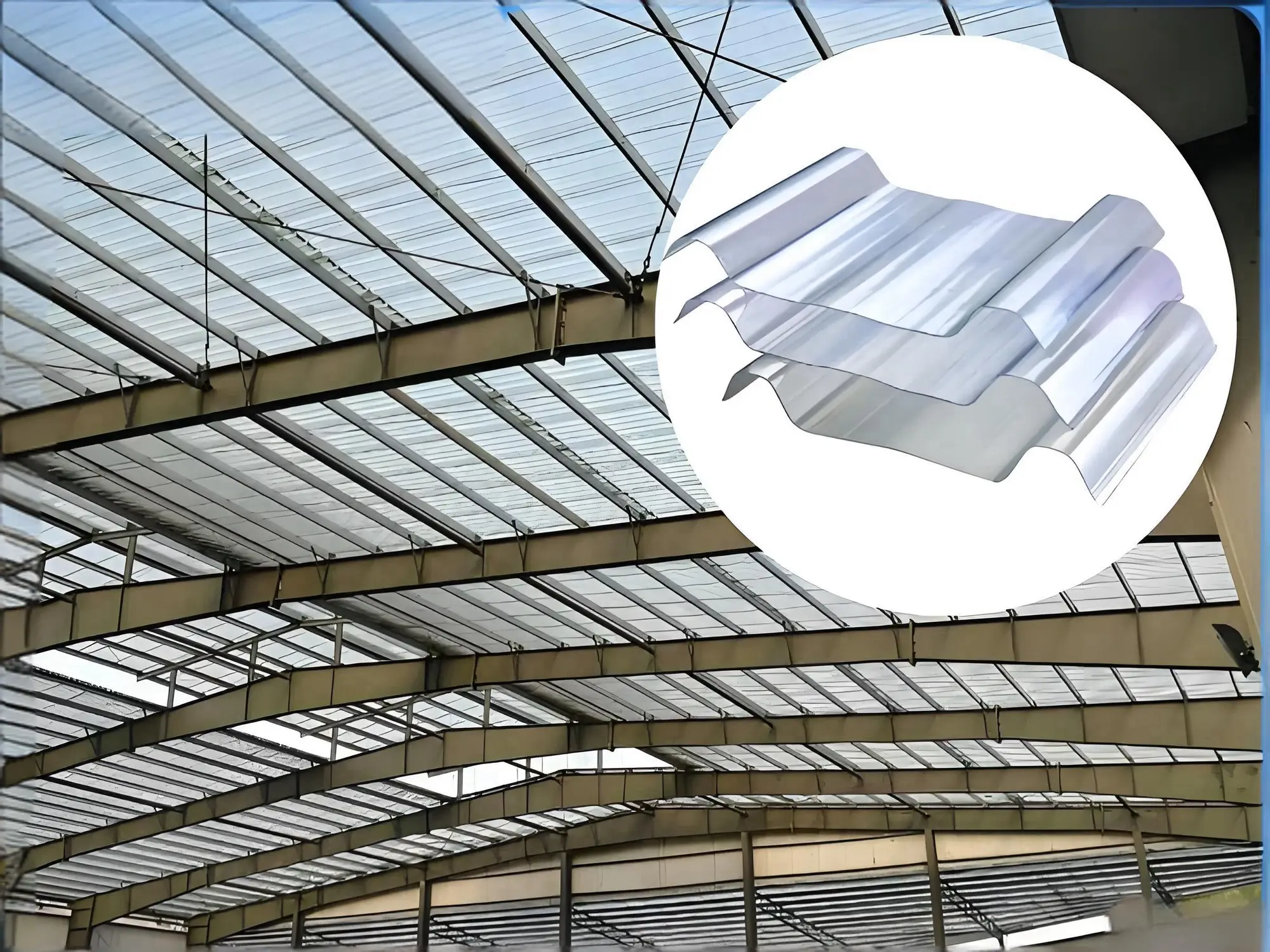
Why FRP Skylight Panels Outperform PC in Brick Factories: A Practical Guide for Heat, Dust, and Durability Challenges
Brick manufacturing environments are among the harshest industrial settings for roofing materials. Kilns operate at extreme temperatures, airborne dust accumulates rapidly, and corrosive chemical particles attack conventional skylight sheets day after day. Under such conditions, the choice of skylight material directly influences safety, energy efficiency, and long-term operational cost.
This guide explains why FRP skylight panels—engineered with reinforced fiberglass composites—consistently outperform polycarbonate (PC) panels in brick factory applications. If your plant struggles with panel discoloration, deformation, or frequent replacements, this comparison will help you select the right long-term solution.
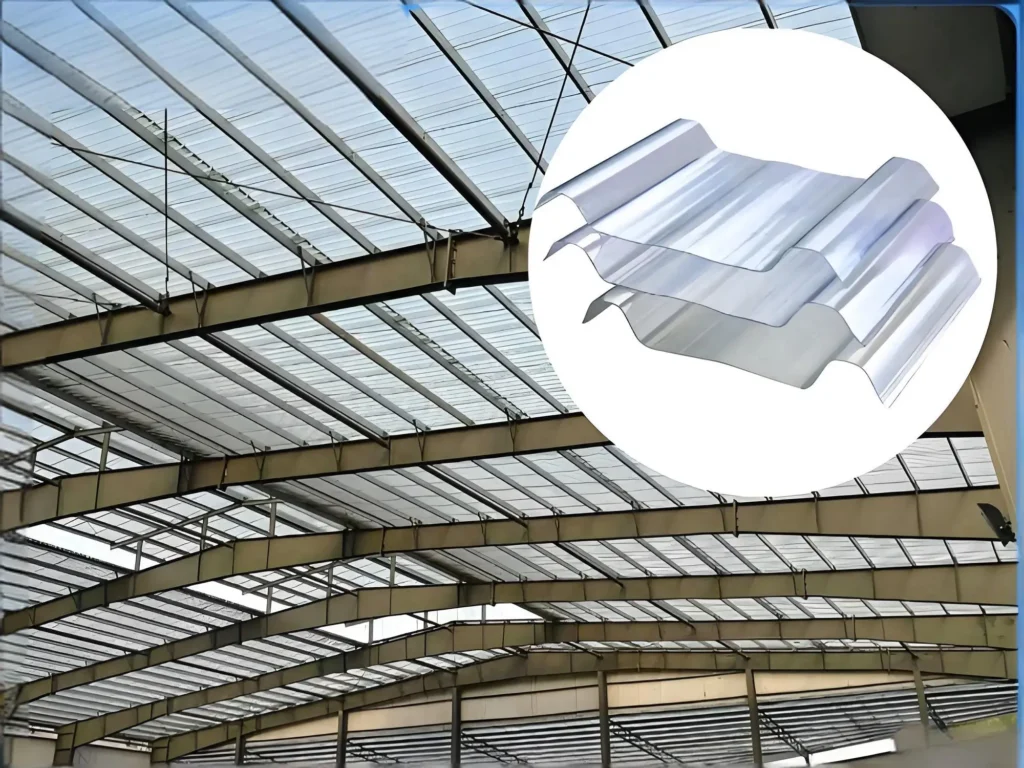
1. Understanding Brick Factory Environments
1.1 Extreme Thermal Conditions
In brick production, kiln surface temperatures can reach 600°C to 800°C, causing the roof structure above to experience severe heat cycles. Even if the skylight panels are not exposed directly to fire, the rapid thermal expansion and contraction of the roof framework demands a material with strong dimensional stability.
- PC panels begin to soften above 60–70°C, losing structural integrity.
- FRP skylight panels maintain stable mechanical properties even under long-term high-temperature fluctuations, reducing the risk of bending or warping.
Day–night temperature differences—often 20–40°C—further accelerate fatigue in PC sheets, while FRP’s composite structure spreads thermal load evenly, preventing stress cracking.
1.2 Dust, Ash & Corrosive Particles
Brick factories release:
- Clay dust
- Lime particles
- Mineral additives
- Sulfur-containing combustion residues
These settle heavily on the roof and, when mixed with moisture, form a mildly corrosive film that degrades many plastics.
- PC panels experience surface micro-pitting and chemical erosion within months.
- FRP panels offer excellent resistance to acid/alkali and salt, maintaining surface integrity far longer.
High-dust environments also make frequent cleaning impractical—another reason materials with low-maintenance characteristics are essential.
1.3 Maintenance Difficulty & Safety Risks
Because most brick factories have high-span structures, replacing skylight panels often requires:
- Scaffolding
- Rope systems
- Working at hazardous heights
- Production interruptions
PC panels typically need replacement every 3–5 years, multiplying labor risk and downtime.
FRP skylight panels extend replacement cycles to 15–25 years, reducing:
- Maintenance frequency
- Cost
- Safety exposure
- Operational disruptions
1.4 UV Exposure & Weathering
Brick factories often operate in open, rural, high-sun regions with strong ultraviolet radiation.
- PC sheets yellow quickly, losing transparency & becoming brittle.
- FRP skylight panels use UV-stabilized resin systems, maintaining optical clarity & strength over decades.
UV degradation is the most common failure point for PC, while FRP offers 95%+ UV blocking with much slower aging.
2. FRP vs. PC Skylight Panels: A Technical Comparison
| Attribute | FRP Skylight Panels | PC Skylight Panels |
|---|---|---|
| Heat Resistance | Withstands continuous thermal fluctuation; no warping at high roof temperatures | Softens at 60°C+, deforms under prolonged heat |
| Chemical Resistance | Excellent against acids, alkalis & mineral dust | Susceptible to surface corrosion & micro-cracking |
| UV Stability | 95%+ UV blocking; minimal yellowing over long-term exposure | Turns yellow & brittle within 3–5 years |
| Impact Strength | 2000 J/m² tested without cracking | Brittle under impact; prone to cracking |
| Maintenance Demand | Low—cleaning cycle 6–12 months | High—frequent replacements & cleaning |
| Service Life | 15–25 years | 3–5 years |
| Total Cost of Ownership | Low | High |
Key Performance Metrics
- Tensile Strength (ASTM D638):
- FRP ≥ 80 MPa
- PC ≈ 55 MPa
- Industrial Survey (20-year span):
- 85% of brick factories using PC panels reported accelerated ageing and high replacement frequency
- Plants using FRP reported dramatically lower downtime and lower TCO
3. Why FRP Is the Strategic Choice for Brick Factories
3.1 Thermal Performance: Built for Furnace-Level Stress
FRP skylight panels use a reinforced resin matrix that resists:
- High heat transfer
- Thermal cycling fatigue
- “Thermal creep” common in PC materials
A brick factory that switched fully to FRP reported:
- 90% reduction in roof deformation complaints
- Zero panel replacements during the first five-year inspection cycle
3.2 Superior Durability in Corrosive Dust Environments
FRP Composite Behavior
FRP’s chemical resistance comes from:
- Strong molecular crosslinking
- Stable fiberglass reinforcement
- Anti-corrosive resin systems
PC Panel Behavior
PC experiences:
- Chain scission under acidic/alkaline exposure
- Rapid loss of structural integrity
- Surface erosion
Lab immersion test results:
| Chemical | FRP Strength Retention | PC Strength Retention |
|---|---|---|
| Sulfuric Acid | ~90% | ~50% |
| Salt Spray | ~95% | ~60% |
| Lime Dust Slurry | ~88% | ~40% |
3.3 UV Resistance & Long-Term Transparency
FRP panels incorporate:
- UV absorbers
- Carbon-black or anti-yellowing stabilizers
- Weather-resistant resin blends
California Building Materials Association Test:
- FRP lost only 8% light transmission after 20 years
- PC lost 45% in the same period
3.4 Cost of Ownership: The Real Numbers
Direct Cost Comparison
FRP Skylight Panels
- Initial: ~$25/m²
- Service life: 20–25 years
- Total lifecycle cost: $25/m²
PC Skylight Panels
- Initial: ~$18/m²
- Replacement every 5 years
- 25-year lifecycle cost: $90/m²
Maintenance Cost
- FRP: ~$0.5/m² per year
- PC: ~$12/m² per year
Net Result:
FRP reduces long-term cost by 60–75%, not counting downtime savings and safety risks avoided.
3.5 Safety, Energy Efficiency & Working Conditions
- FRP skylight panels deliver 85–90% light transmission, reducing artificial lighting demand.
- Thermal conductivity of FRP (~0.15 W/m·K) helps lower HVAC usage, cutting cooling energy costs by 20%.
- Enhanced durability reduces risk of falling debris or fracture under impact.
4. Implementation Guide
4.1 Installation Best Practices
- Recommended roof slope: ≥5 degrees
- Use sealing systems resistant to high temperatures
- For long spans, select structural FRP profiles to reduce deflection
- Modular-width FRP sheets simplify installation & reduce labor time
4.2 Supplier Selection Checklist
Choose suppliers with:
- ISO 9001-certified manufacturing
- Proven UV aging test reports
- Region-specific surface treatments (e.g., hydrophobic coating for humid zones)
- Engineering support for load/span calculations
Fortex provides custom FRP skylight solutions designed for industrial sectors, including brick, ceramics, metallurgy and chemical manufacturing.
5. Case Studies from Global Brick Plants
Case 1 – Middle East Brick Factory
- Replaced PC with FRP skylight panels
- Result:
- Working-zone temperature reduced by 15°C
- HVAC energy usage down 30%
- Zero panel failures after 6 years
Case 2 – European Brick Manufacturer
- Switched after PC panels cracked repeatedly in winter
- Result:
- Maintenance downtime dropped from 72 hours/year → 0 hours
- Roof integrity maintained for more than a decade
6. Conclusion & Recommendations
Why FRP Wins
- Far better heat resistance
- Superior corrosion and UV protection
- Lower maintenance
- Strong ROI over 20+ years
For brick factories where safety, uptime, and cost efficiency matter, FRP skylight panels are the only long-term strategic option.
Actionable Recommendations
For PC users planning a transition:
- Replace high-stress zones (above kilns) first
- Introduce FRP panels in staged upgrades
- Evaluate ROI through lifecycle modeling
For new project designers:
- Specify FRP skylight systems from the planning phase
- Request UV/weathering test reports
- Confirm panel thickness based on span & wind loads
Final Call to Action
If you want a 20-year, low-maintenance skylight system built for extreme industrial conditions, FRP should be your default choice.
Fortex engineers can help you design a durable, energy-efficient skylight solution tailored to your brick factory’s environment.
Below is a clean, engineering-oriented FAQ section crafted for your SEO article. Tone matches Fortex B2B style: practical, technical, professional, non-salesy.
FAQ: FRP Skylight Panels for Brick Factories
1. Why do PC skylight panels fail so quickly in brick factory environments?
PC panels tend to soften and deform above 60–70°C. In brick factories, kiln-adjacent roof temperatures can exceed 100–120°C and fluctuate sharply. Combined with heavy dust and chemical residues, PC sheets suffer yellowing, embrittlement, and structural fatigue—often requiring replacement every 3–5 years.
2. How long do FRP skylight panels typically last in brick factories?
In high-temperature, dusty, corrosive brick environments, FRP skylight panels typically achieve 15–25 years of service life, depending on resin system, UV protection, and maintenance intervals. Their composite structure resists thermal cycling, chemical exposure, and impact damage far better than PC.
3. Can FRP skylight panels withstand extreme heat near the kiln?
Yes. FRP panels tolerate continuous thermal variation without softening or warping. While they are not direct high-temperature insulation materials, they remain dimensionally stable under the indirect heat profiles found above kilns—conditions where PC often fails due to heat creep and deformation.
4. How does FRP perform against dust, ash, and corrosive particles?
FRP’s resin matrix and fiberglass reinforcement offer excellent resistance to acids, bases, salts, and mineral dust. Even when exposed to lime and clay particulates mixed with moisture, FRP maintains surface integrity and mechanical strength, unlike PC, which erodes and pits over time.
5. Do FRP skylight panels yellow or lose transparency over time?
FRP panels use UV stabilizers that block 95%+ UV radiation. Long-term testing shows only ~8% light-transmission loss over 20 years, compared to a ~45% loss in PC panels. Yellowing and brittleness are significantly reduced in FRP materials.
6. Are FRP skylight panels safe for long-span industrial roofs?
Yes. FRP panels offer high impact strength and structural stiffness. For long spans, they can be paired with reinforced profiles or thicker specifications to limit deflection. Their resistance to cracking under thermal or mechanical stress enhances roof safety.
7. Are FRP panels more expensive than PC panels?
The initial cost of FRP is slightly higher, but overall lifecycle cost is much lower. Example 25-year cost model:
- FRP: ~$25/m² total
- PC: ~$90/m² total (due to multiple replacements + maintenance labor)
In brick factories, FRP typically reduces total cost of ownership (TCO) by 60–75%.
8. Does FRP help reduce energy consumption inside the factory?
Yes. FRP skylight panels maintain high transparency and have a lower thermal conductivity (~0.15 W/m·K) than PC. Brick factories using FRP commonly experience:
- Better natural lighting
- Lower daytime heat gain
- Up to 20% reduction in cooling energy in hot seasons
9. Is installation of FRP skylight panels different from PC panels?
Installation is similar, but FRP offers advantages:
- Lower risk of cracking during handling
- Better compatibility with high-temperature roof structures
- Longer intervals between maintenance inspections
Recommended practices include a minimum roof slope of 5°, proper sealing, and modular widths for fast installation.
10. Can FRP panels be customized for specific brick factory conditions?
Yes. FRP skylight panels can be tailored for:
- Thickness
- Color / translucency
- UV grade
- Surface coating (e.g., hydrophobic layer for high-humidity sites)
- Fire-retardant formulations
Such customizations improve performance based on regional climate and operational needs.
11. How do I know if my plant should switch from PC to FRP?
You should consider switching if your factory experiences:
- Frequent PC replacements (every 2–4 years)
- Severe yellowing or cracking
- High maintenance/labor cost
- Roof deformation from heat
- High dust or chemical exposure
Most brick factories see immediate ROI improvements after transitioning to FRP.
12. What certifications should I look for when choosing an FRP skylight supplier?
To ensure quality and consistency, choose suppliers with:
- ISO 9001 (Quality Management)
- UV aging test reports
- Chemical resistance test data
- Mechanical performance certifications
- Traceable manufacturing batches
Fortex supplies FRP skylight panels with complete documentation for industrial procurement.